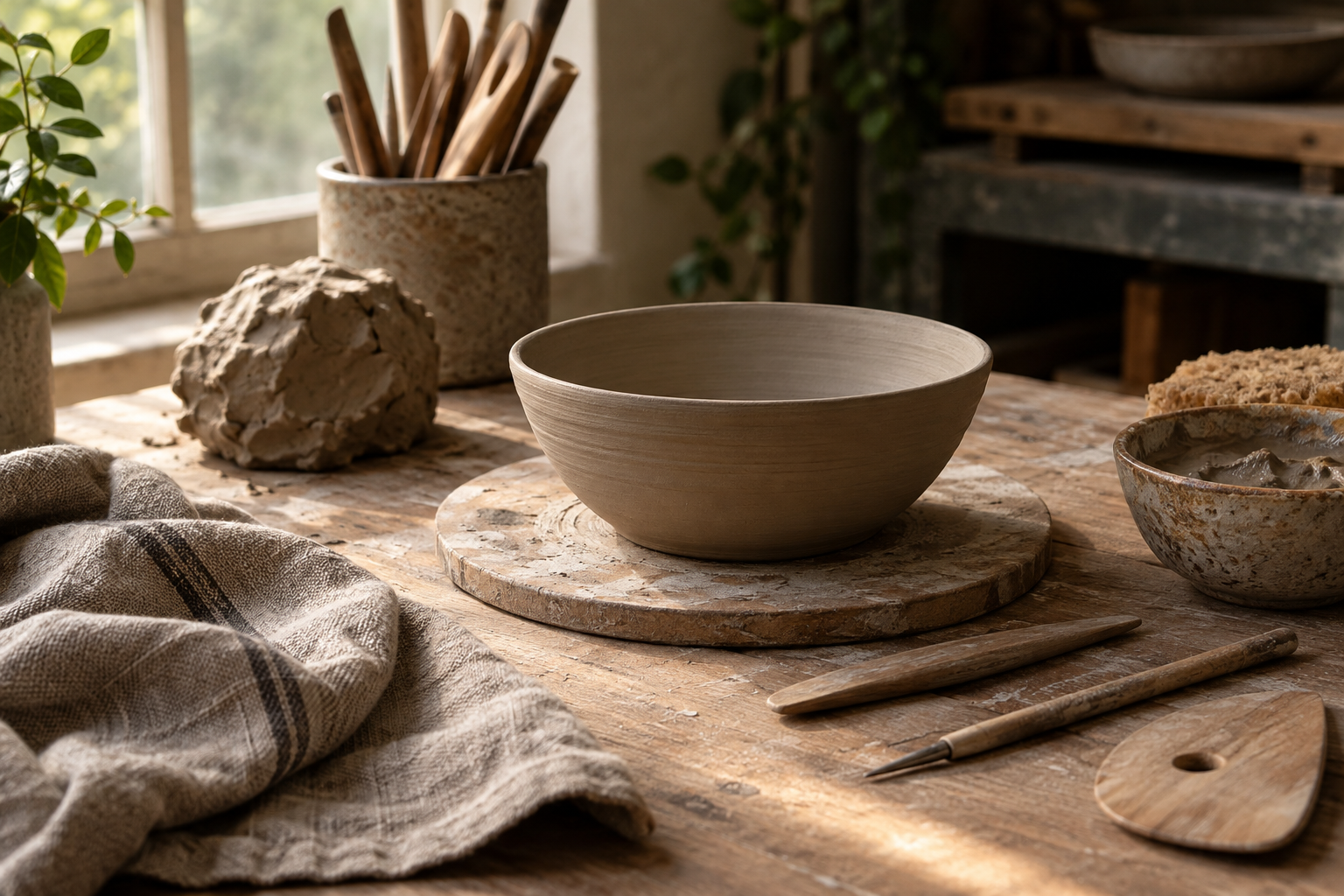
A finished ceramic piece holds a sequence of decisions that are easy to miss on the shelf. Shape, weight, surface, and color each develop at a different stage. The process rewards patience as much as precision.
Preparing and shaping
We begin by preparing the clay so its texture is consistent. A form may be thrown or built by hand, depending on the piece. At this stage we look for a useful silhouette and enough material in the places that need strength.
Trimming and drying
As the clay firms, the base and edges can be refined. Handles and other details must meet the body at the right stage of drying. Pieces then dry gradually; rushing this part can create uneven stress before the kiln ever comes into play.
The first firing
The initial firing turns fragile dry clay into a more durable, porous ceramic body. After it cools, we inspect the piece and prepare the surface for glaze. Small glaze tests help us understand how color and texture behave on a particular clay.
Glazing and firing again
Glaze becomes its finished surface in a later firing. Heat, material, and placement all influence the result. The kiln must cool before pieces are handled and checked.
The final review is practical: does the foot sit well, does the rim feel comfortable, and is the piece ready for its intended use? Those quiet details connect a long making process to an ordinary moment at home.